



Duty Free Mazda CX-5 Import Kenya | Returning Residents Guide
August 21, 2026

Have you ever heard of Horse power or Torque or an Engine’s CCs? If you have ever gone car shopping, chances are you have heard someone say:
“Bro, this one is a 2.0.”
Someone else immediately responds:
“Forget the 2.0. This thing makes 250 horsepower!”
Then another guy, usually leaning against a car with his arms crossed like he personally designed the engine, says:
“Horsepower is nothing. Look at the torque. 400 Nm!”
At this point, you are probably wondering: “So… which car is actually faster?”
Welcome to one of the most misunderstood conversations in the automotive world.
After spending years around cars, one thing I have learned is that Engine CC, horsepower and torque are not the same thing. They describe different aspects of an engine, and understanding the difference can completely change the way you look at cars.
So grab your imaginary toolbox, and let’s break this down without turning it into a mechanical engineering lecture.
Let’s start with Engine CC, because this is probably the number most people mention when talking about cars.
You will hear things like: 1.0L or 1.5L or 2.0L or 5.0L
When someone says a car has a 2.0-litre engine, they are talking about its engine displacement.
CC means cubic centimetres.
So:
2,000 cc = 2.0 litres
Engine displacement basically tells us the total volume swept by all the pistons inside the engine.
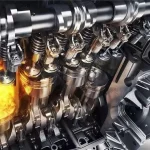
Think of the engine as a collection of cylinders. Inside each cylinder, the piston moves up and down. The space that the piston travels through contributes to the engine’s displacement.
More displacement generally means the engine can move more air and fuel through the cylinders.
And that matters because an engine needs air and fuel to make power.
But here’s where things get interesting.
A 2.0-litre engine can produce more power than an older 3.0-litre engine.
“How?”
Technology.
Turbochargers, better fuel injection, variable valve timing, compression ratios, engine design and computer controls can dramatically change how much power an engine produces.
“This car has a bigger engine, so it must be faster”
This isn’t always correct. It’s like saying a bigger kitchen automatically means a better chef. Which it doesn’t.
Now we get to torque, measured in Newton-metres (Nm). Torque is essentially the twisting force produced by the engine.
Imagine using a wrench to loosen a stubborn bolt.
You apply force to the handle and the wrench twists the bolt. That’s torque.
Your engine does something similar. Combustion inside the cylinders pushes the pistons, which turns the crankshaft. That rotating force is torque.
And torque is extremely important when you’re actually driving.
Ever driven a car that feels like it pulls strongly when you accelerate?
That’s where torque becomes important.
A car with lots of torque can feel very strong when:
This is one reason diesel vehicles have traditionally been loved for their strong pulling ability.
A diesel SUV might not sound like a race car, but when you point it up a hill with five passengers inside, it can feel like it has been personally offended by gravity.
Now we arrive at the celebrity of the automotive world:
Horsepower is a measurement of power—essentially, how quickly an engine can do work.
While torque tells us about twisting force, horsepower takes that torque and considers how quickly the engine can produce that force.
This is why two engines can have similar torque but produce different horsepower figures.
And here’s a simple way to remember it:
Torque is the twisting force. Horsepower is how quickly that force can be delivered.
That’s why horsepower becomes particularly important when we’re talking about high-speed acceleration and top-end performance.
A high-revving sports car might not have the biggest engine or the highest torque figure, but it can produce serious horsepower because it can produce its torque at very high engine speeds.
This is where things get exciting.
If you ever attend a car meet, mention torque and horsepower in the same sentence.
Then sit back.
You may accidentally start a debate that lasts longer than the actual car show.
But here’s the easiest way to explain it.
Imagine you’re riding a bicycle.
Torque is how hard you push the pedal.
Horsepower is how quickly you can keep applying that effort.
If you push extremely hard but slowly, you have lots of force but aren’t moving particularly quickly.
If you can keep producing force while pedalling rapidly, you’re generating more power.
That’s why both torque and horsepower matter.
Neither one exists in isolation when you’re judging how a car performs.
Here’s the answer that annoys everyone:
It depends.
Yes, I know. Terrible answer.
But it’s the correct one.
A car’s performance depends on much more than Engine CC, torque and horsepower.
You also need to consider:
For example, imagine two cars.
2.0L engine
200 horsepower
300 Nm torque
1,800 kg
2.0L engine
200 horsepower
300 Nm torque
1,300 kg
Same Engine CC.
Same horsepower, Same torque but Car B is significantly lighter.
And that can make a huge difference in acceleration and handling.
This is why simply looking at the engine badge isn’t enough.
Not necessarily—but generally, a larger engine has the potential to consume more fuel.
A larger engine typically has greater displacement and can move more air and fuel.
However, modern technology has complicated the old “bigger engine = terrible fuel economy” rule.
A modern 1.5-litre turbocharged engine can produce impressive power while maintaining reasonable fuel consumption.
Meanwhile, an older naturally aspirated 2.5-litre engine may produce less power while consuming considerably more fuel.
So don’t judge a car purely by Engine CC.
Look at the entire engine design.
Here’s my advice after years of being around cars:
Don’t get obsessed with one number.
If you’re buying a car for daily commuting, you might care more about fuel economy, reliability, low-speed drivability and maintenance costs.
If you’re buying a family SUV, strong torque can be very useful for carrying passengers and climbing hills.
If you’re buying a performance car, horsepower, weight, gearing and traction become much more important.
And if you’re comparing engines, Engine CC gives you useful information about the engine’s size—but it doesn’t tell the whole performance story.
Think of the three numbers as different pieces of the puzzle.
Torque:Tells you about the engine’s twisting force.
Horsepower:Tells you about the engine’s power output and ability to perform work quickly.
And if any help is needed visit us at CarsKenya, we will be happy to help.


