Advantages Of Hybrid Cars
October 6, 2026
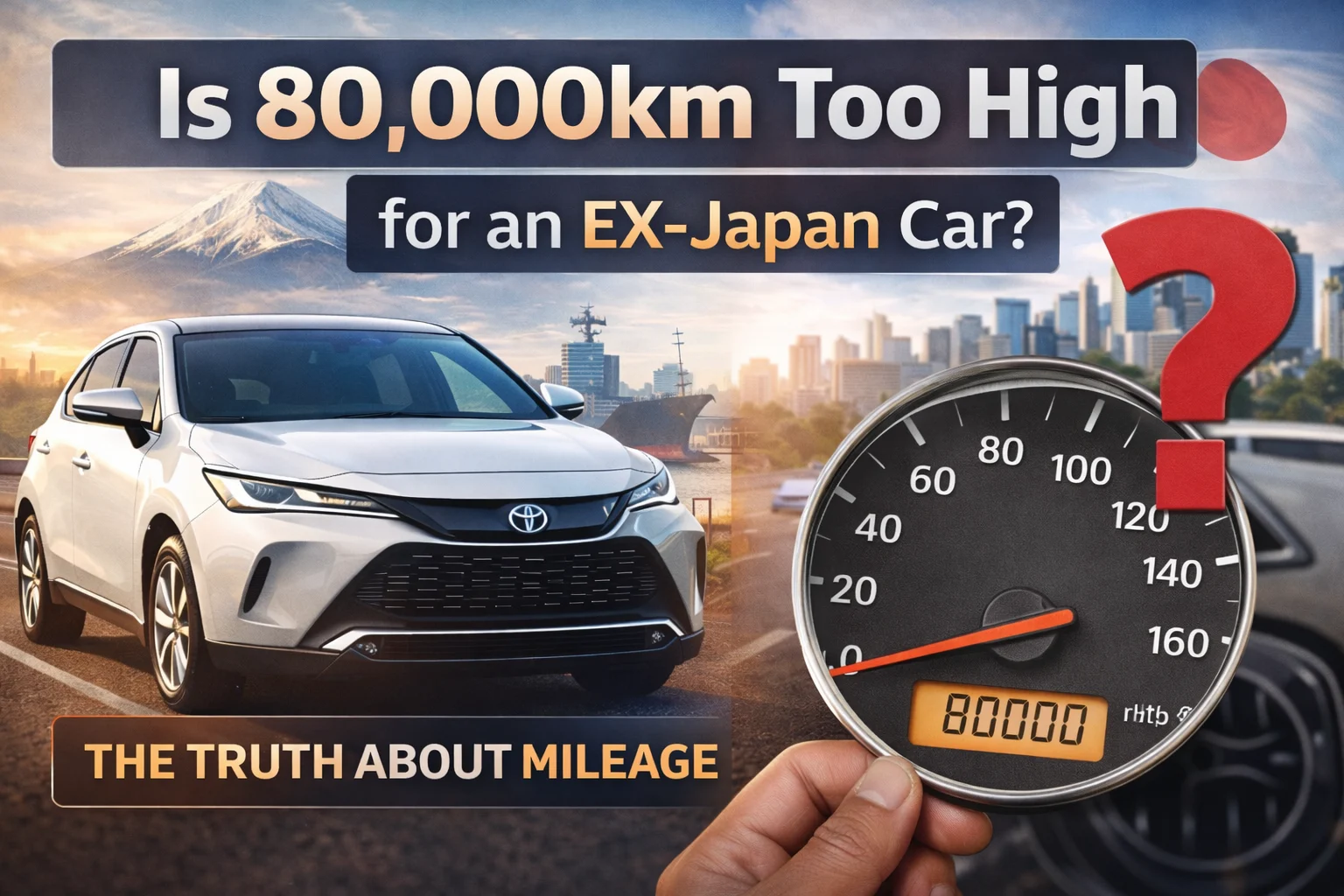
Is 80,000km too high for an EX-Japan car? If you’ve ever asked a seller in Kenya, “How many kilometers?” and they answered like you asked them for their M-Pesa PIN, you already know mileage is a sensitive topic.
But let’s talk about it properly—because this is one of the biggest questions buyers ask when considering imports:
Is 80,000km too high for an EX-Japan car?
Here’s the truth: mileage matters, but it’s not the whole story. The real question is whether that 80,000km was gentle highway driving with consistent servicing… or 80,000km of abuse, poor maintenance, and “we’ll fix it later.”
In this deep dive, we’ll unpack the truth about mileage, why EX-Japan units are different, and how smart buyers in Kenya choose imports that stay reliable for years.
In Kenya, mileage is often treated like a “value meter.” Lower mileage equals higher price, higher status, and less perceived risk. That’s understandable—nobody wants to buy a car and become a regular customer at the garage.
But imports come from different driving environments. A car’s life in Japan is usually not the same as a car’s life in Kenya. So when a buyer asks “is 80,000km too high?”, the truth is you must interpret that mileage in context.
Mileage is not just a number. It is a story and some stories are very clean.
Let’s say it again for the people at the back:
The truth is 80,000km too high is not a yes-or-no question.
For an EX-Japan vehicle, 80,000km can be perfectly healthy—especially if:
In fact, for many modern Japanese vehicles (Toyota, Mazda, Nissan, Subaru), 80,000km is still early life if maintenance has been done correctly.
The truth is: a well-maintained 80,000km EX-Japan car can be a better buy than a 40,000km car with questionable history.
One reason imports from Japan dominate Kenya is that Japanese vehicles often live a more disciplined life:
So when you see “80,000km” on a clean EX-Japan unit, you’re often looking at a car that has been maintained on time.
This is why imports from Japan can feel fresh even when the mileage looks “higher” than what some Kenyan buyers expect.
Some buyers chase the lowest mileage like it’s a Black Friday deal:
“Boss, I want 35,000km only.”
But here’s the truth: low mileage doesn’t always mean better. A car can have low mileage and still be a headache if it has:
So the truth about mileage is this: condition and history matter more than just the number.
If you want to know whether 80,000km too high is a risk, evaluate these five things:
For imports from Japan, the auction sheet is your best friend. It tells you about:
The truth is: auction notes reveal more than the odometer.
A genuine 80,000km car usually shows normal wear:
If the interior looks like it survived a matatu route but claims 48,000km, the truth is something doesn’t add up.
Imports with documented servicing are safer buys.
Oil changes, filters, brake servicing—these matter.
The truth is a serviced car is a safe car.
Smooth shifting, stable idle, no strange vibrations.
This is where professional inspection matters.
Japan has coastal areas and snow regions. Some units may have underbody rust.
The truth is: underbody checks protect your money.
Let’s make this simple:
The truth is: maintenance beats mileage. That’s why professional imports from trusted importers win the long game.
Cars at 80,000km can be cheaper than low-mileage units, yet still offer years of reliable service.
That means you can:
For buyers comparing imports, 80,000km gives you better value—if you choose wisely.
This is one reason imports from Japan remain the preferred route for Kenyan buyers who want premium specs without showroom pricing.
In the world of used cars, mileage tampering is like bad Wi-Fi—it shouldn’t exist, but it does.
The truth is: some vehicles in the market may have altered odometers. That’s why importing through a trustworthy company matters.
With proper imports from Japan, you can verify details through auction records and inspection history.
This is exactly why CarsKenya focuses on traceable, verifiable imports.
Let’s answer it clearly. What matters most is:
For most Japanese vehicles, 80,000km with good maintenance can still give you many years of stress-free driving in Kenya.
Imports are not just about getting a car from Japan to Kenya. Imports are about getting the right car.
At CarsKenya, we help you:
Because the truth is: the best imports are the ones that keep you driving not visiting the garage every month.
Your dream car should come with excitement not surprises.

Experience a seamless car import service tailored to your needs with CarsKenya – the Home of Car Import Experts.

WhatsApp us