Advantages Of Hybrid Cars
October 6, 2026
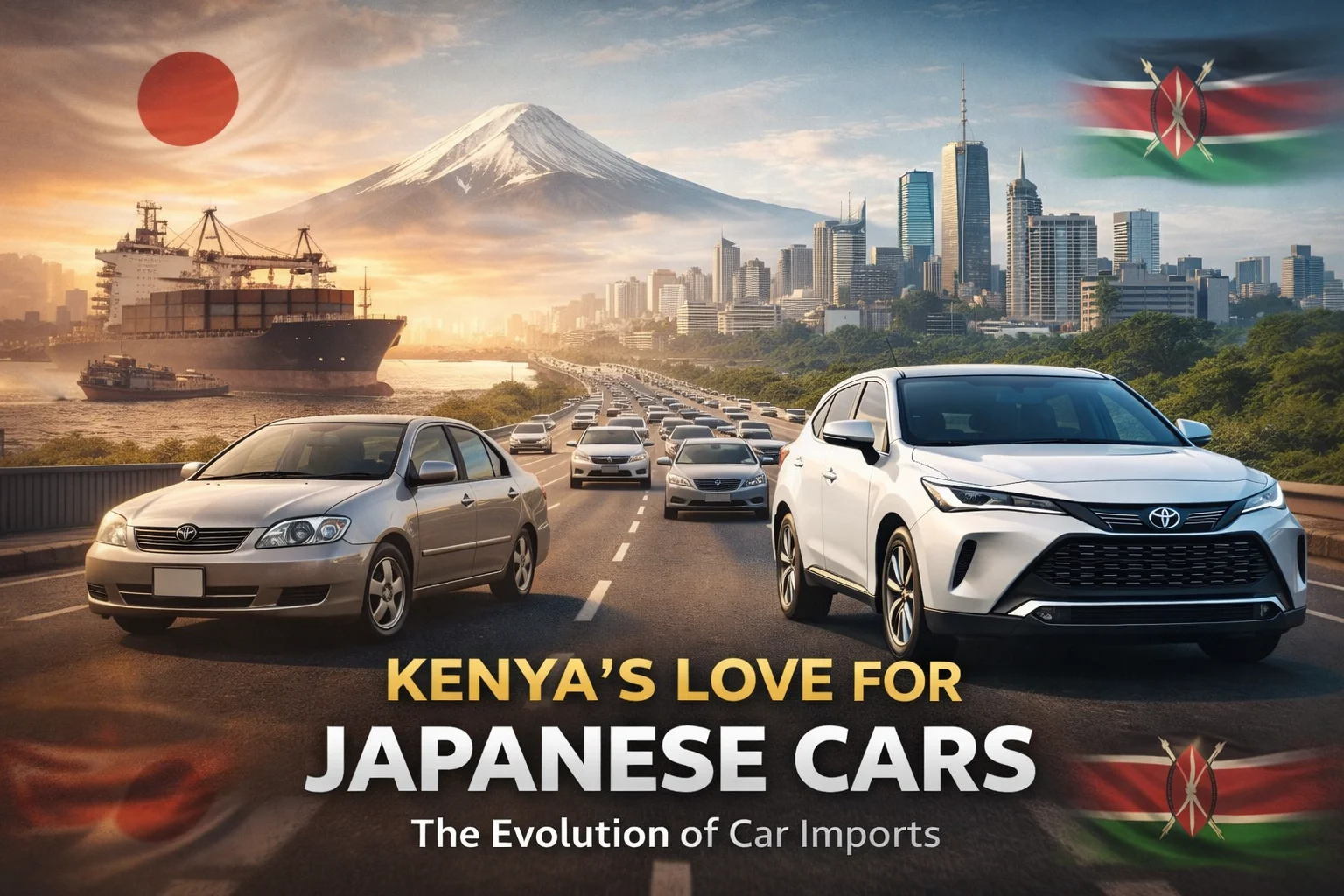
If you’ve ever stood by the roadside in Nairobi watching traffic flow and thought, “Why is it basically a Toyota convention out here?”you’re not alone.
Kenya’s love affair with Japanese cars didn’t happen by accident. It’s the result of decades of economics, policy shifts, buyer habits, and one powerful truth: Japan built reliable cars, and Kenya built a market that rewards reliability.
This deep dive walks through how Japanese car imports shaped the Kenyan market, how regulations and inspection systems evolved, and why despite new trends Japan still supplies the backbone of foreign used cars in Kenya. Along the way, I’ll keep it professional… but I won’t pretend importing isn’t sometimes an emotional journey (because it is).
Long before importing became mainstream, most buyers relied heavily on locally available vehicles—often older, high-mileage, and “mysteriously maintained” (you know the type: the car that comes with a fresh dashboard polish but a secret gearbox problem).
As Kenya’s economy and middle class expanded, buyers began demanding better: newer cars, better comfort, better fuel economy, and fewer surprise visits to the mechanic.
Japan quickly became the favorite source because it offered:
And most importantly, Japanese cars fit Kenya’s reality: daily commutes, mixed road conditions, and long-term ownership.
The growth of Japan auction systems changed everything. Auctions brought transparency and volume:
This auction-based pipeline turned importing into a repeatable business—ideal for Kenyan dealers and individual buyers searching for the “best spec” vehicles.
It also explains why certain models became iconic in Kenya:
As imports increased, so did the need for standards. Kenya moved toward structured conformity requirements for imports especially used vehicles.
One major milestone was the rollout of Pre-Export Verification of Conformity (PVoC) in Kenya, which a policy background paper describes as being in place since its rollout in 2005. (PTB)
In simple terms: Kenya wanted imports to meet defined standards before arriving (or at least be verifiable).
At the same time, Kenya maintained requirements that shape the market to this day—like vehicle age limits. The Kenya Revenue Authority’s guidance on motor vehicle importation includes the rule that used vehicles imported into Kenya must not exceed 8 years from year of manufacture (and related compliance requirements). (kra.go.ke)
These policies helped achieve two things:
This era separated casual importers from serious operators. You could no longer “just ship a car.” You needed compliance.
By the 2010s, Kenya’s import market wasn’t just functional—it became aspirational.
Buyers didn’t only want “a car.” They wanted:
This era also saw huge shifts in buying behavior:
“Dream car” became a real category, not a joke. And Japan—because of its variety and quality—continued to supply that dream.
Now let’s talk about today’s biggest driver: running costs.
As fuel prices and daily commuting pressures increased, demand shifted heavily toward:
Japan dominates hybrid supply, and that’s why we’ve seen a rise in imports like:
And modern Kenyan buyers are sharper. They ask about:
They don’t just want a car. They want a plan.
Compliance rules continue to shape what enters Kenya.
For example, public notices and reporting have highlighted how enforcement can tie import acceptance to the age/registration window under existing standards and guidance. (Citizen Digital)
For buyers, this matters because:
In short: importing is not just shopping. It’s compliance + logistics + timing.
Even after decades of evolution, Japan remains the strongest source for Kenyan imports because it matches the Kenyan buyer’s priorities:
Toyota, Mazda, Nissan, Subaru—parts and service knowledge are everywhere.
Japan offers multiple trims of the same model, which is why you can find everything from “basic” to “boss level.”
Auction grading and structured resale systems help maintain quality.
Kenya’s market rewards reliability. Reliable cars sell faster, and at better value.
This evolution created a market where the smartest buyers win.
If you’re importing today, your success depends on:
And the biggest secret is this:The best import deal is not always the cheapest auction price.
It’s the smoothest landed cost with the least surprises.
Kenya’s import market has evolved from informal buying to professional sourcing. That means customers now value:
That’s exactly where CarsKenya comes in.
We help you:
Because importing should feel exciting—not like a suspense movie.

Experience a seamless car import service tailored to your needs with CarsKenya – the Home of Car Import Experts.

WhatsApp us