



Can You Import a Car from Japan Without Paying the Full Amount Upfront?
November 13, 2026
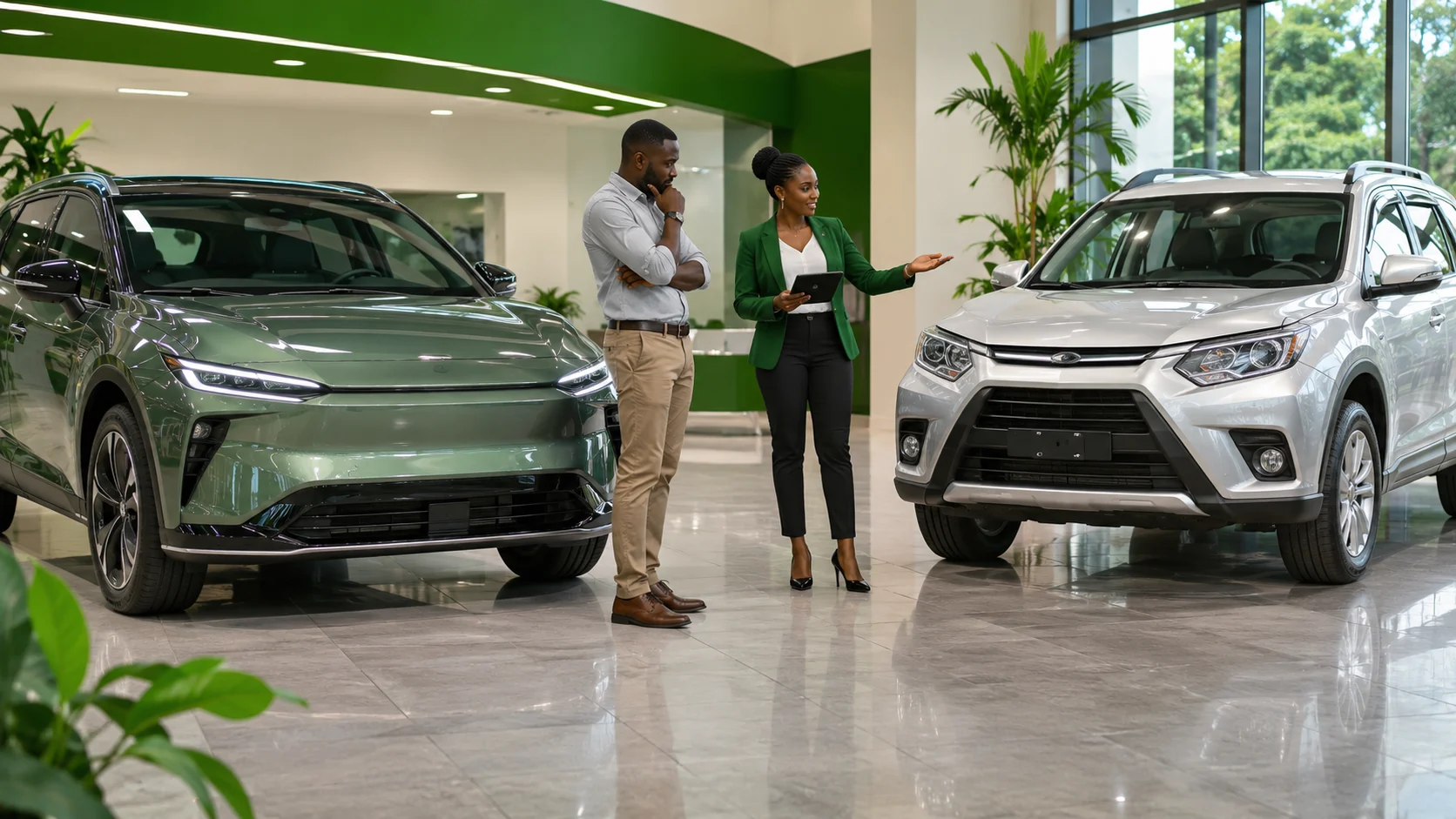
On one side is a new Chinese SUV with modern styling, a large display and an appealing equipment list.
On the other is a Japanese import with the specification you want, a documented history and a price within reach.
Which offers better value?
The answer depends on the specific vehicles—and what ownership will look like over the next few years.
For Kenyan buyers, a meaningful comparison includes warranty coverage, inspection results, parts support, financing and the likely cost of selling later.
Chinese vehicles should be assessed on their actual local offering.
For example, CFAO Mobility’s Kenyan BYD campaign advertises vehicle and battery warranties alongside a local service and parts network. Buyers should confirm the exact terms for the model and vehicle being purchased. See CFAO Mobility Kenya’s BYD information. BYD Switch on Campaign
That support is relevant when comparing a locally supplied new vehicle with a used import. Equally, coverage advertised for a locally distributed vehicle should never be assumed to apply to an independently imported example.
Ask for the warranty document, exclusions and service requirements before assigning value to the promise.
When comparing a Japanese import, look for evidence that supports the asking price:
A recognised badge can help attract attention. Your decision should still rest on the actual unit.
Review CarsKenya’s sourcing and import process to understand the stages involved in selecting and bringing a vehicle into Kenya.
They can influence what buyers are willing to pay.
If a new vehicle becomes available close to the price of a used alternative, some buyers may prefer the new vehicle’s warranty and equipment. That creates a reason to negotiate carefully when buying used.
However, it would be misleading to claim that Japanese used-car values are collapsing across Kenya without supporting local transaction data.
The IEA’s Global EV Outlook 2026 discusses resale and depreciation developments in overseas EV markets. Those findings provide context; they do not establish the resale performance of a particular vehicle in Nairobi. IEA
The practical lesson is to test your purchase against several resale outcomes.
| Factor | New Chinese vehicle | Used Japanese import |
|---|---|---|
| Purchase price | Confirm the on-road price and included charges | Confirm the full landed, registered and delivered price |
| Condition | Inspect the vehicle and verify delivery terms | Examine history, inspection findings and wear |
| Warranty | Check provider, exclusions and servicing conditions | Confirm whether any enforceable coverage applies |
| Parts and service | Check support for the exact model | Check support for the exact model and powertrain |
| Financing | Obtain a written offer | Obtain a written offer |
| Resale | Assess comparable local demand | Assess comparable local demand |
Compare vehicles serving the same purpose. A compact urban crossover and a larger family SUV may share a price bracket while meeting very different needs.
“Parts are available” is a useful starting statement. Follow it with specific questions.
Can you obtain a windscreen, headlamp, suspension component or body panel locally? Who can diagnose electronic faults? What are typical ordering lead times?
For an electrified vehicle, ask about high-voltage diagnostics and battery support. For any vehicle, identify where routine servicing and larger repairs would happen.
This conversation can reveal costs that a showroom equipment list leaves out.
Imagine buying a vehicle for KSh 4 million.
If you later sell it for KSh 2.8 million, depreciation is KSh 1.2 million. If the eventual selling price is KSh 2.2 million, depreciation becomes KSh 1.8 million.
That is a KSh 600,000 difference before comparing fuel, maintenance or finance costs. These figures illustrate scenarios, not predicted market values.
Use conservative resale assumptions, especially if you expect to change vehicles soon. If you intend to keep the car for many years, give greater weight to durability, support and day-to-day suitability.
Are Chinese cars cheaper than Japanese imports?
Some individual comparisons may favour a Chinese model. Compare equivalent vehicles using complete on-road prices.
Do Japanese cars guarantee strong resale?
No. Purchase price, condition, model demand and market changes all affect the outcome.
Which option should I finance?
Compare written finance offers alongside ownership costs. The lowest instalment alone does not establish the best value.
Your next car should make sense on the day you buy it and throughout the years you own it.
If you are considering a Japanese import, ask CarsKenya for suitable options and compare them against the alternatives using the same budget and ownership period.
Call or WhatsApp: 0795 222 111
Publish financing first because it addresses a direct purchase obstacle. Follow with the powertrain comparison, then the Chinese-versus-Japanese buying guide.
| Article | Social/video hook | Lead-generation offer |
|---|---|---|
| Import financing | “Does 100% car financing mean you pay nothing upfront?” | Personalised financing assessment |
| Hybrid vs EV vs petrol | “The cheapest car to buy may cost more to own.” | Vehicle comparison and import quotation |
| Chinese vs Japanese | “New Chinese SUV or Japanese import: what should you compare?” | Shortlist within the buyer’s budget |
Once published, link each article naturally to the other two using descriptive anchors such as “compare hybrid, electric and petrol ownership costs” and “understand car import financing in Kenya.” The suggested slugs above are proposed pages, so add those cross-links after the pages are live.


